
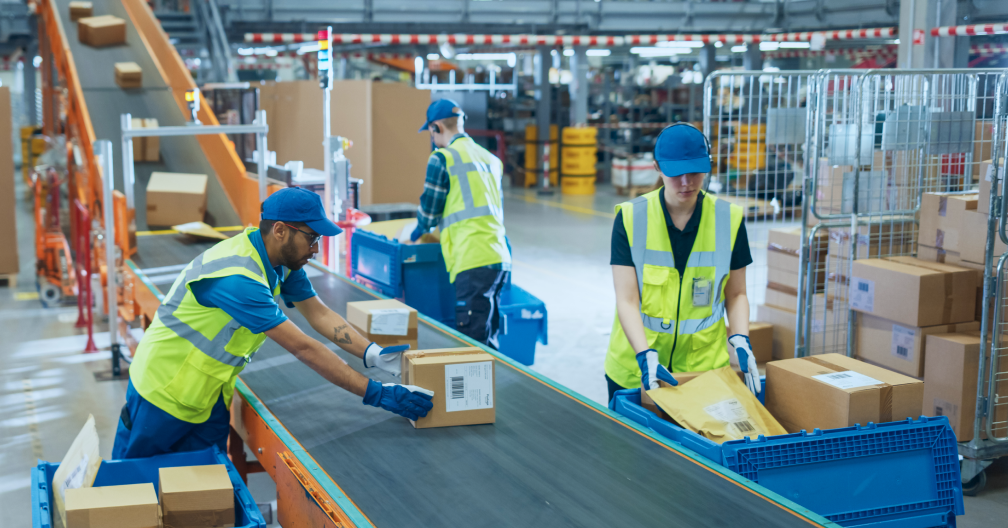
The clock starts ticking the moment a customer confirms their purchase. Inventory verification, picking optimization, packaging selection, carrier coordination—all racing to meet 2-day, next-day, or same-day delivery expectations. This critical operational sequence can transform customer anticipation two ways: lasting satisfaction or damaging disappointment.
Businesses across all sectors recognize that excellence in the warehouse-to-doorstep journey isn’t merely operational—it’s strategically essential. Research shows that 85% of customers who experience delivery issues are less likely to purchase again, while those impressed by their fulfillment experience become valuable brand advocates through repeat business and recommendations.
In this blog, we will examine the essential components of order fulfillment, from foundational models to advanced optimization techniques, providing you with practical strategies to transform your fulfillment operations from a necessary cost center into a powerful competitive advantage.
What is Order Fulfillment?
Order fulfillment encompasses the entire journey from when a customer places an order to when they receive their purchase. This comprehensive process includes receiving inventory, processing orders, picking and packing products, shipping packages, and handling any returns.
At its core, order fulfillment is about delivering on promises made to customers. It’s the physical manifestation of your brand’s commitment to service excellence. The quality of your order fulfillment directly influences customer satisfaction, repeat purchases, and ultimately, your bottom line.
For ecommerce businesses especially, order fulfillment serves as the primary physical touchpoint with customers. Without face-to-face interactions, the unboxing experience and delivery timeliness become critical brand experiences. Efficient order processing and fulfillment ensure that customers receive exactly what they expected, when they expected it.
Order fulfillment in logistics extends beyond mere product delivery. It encompasses inventory management, warehouse operations, transportation coordination, and customer communication. When executed effectively, it creates a seamless flow from purchase to delivery that enhances customer satisfaction while optimizing operational costs.
Types of Order Fulfillment Models
Your choice of fulfillment approach fundamentally shapes your operational infrastructure, capital requirements, and growth potential. Each model offers distinct advantages and limitations that must align with your business objectives, product characteristics, and customer expectations.
In-House Fulfillment
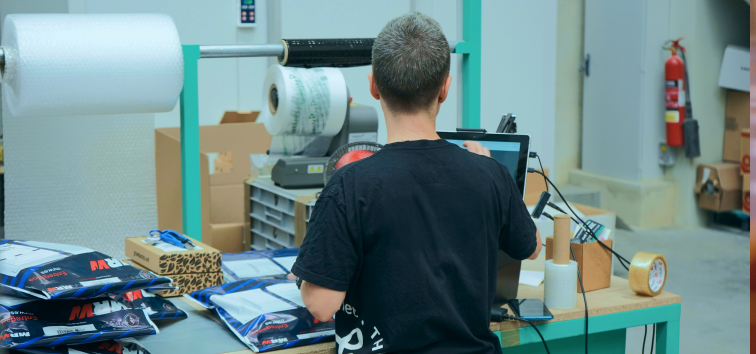
In-house or self-fulfillment puts you in complete control of your fulfillment process. Your team handles everything from warehousing to shipping within your own facilities. This model works well for businesses with specialized products, custom packaging requirements, or those just starting out with manageable order volumes.
Advantages:
- Complete control over quality assurance
- Direct oversight of packaging and presentation
- Flexibility to make immediate process adjustments
- No third-party fees
Disadvantages:
- Requires significant investment in space, staff, and systems
- Limited scalability during peak seasons
- Management attention diverted from core business activities
Third-Party Logistics (3PL)
Third-party logistics providers specialize in handling the fulfillment process on your behalf. Companies ship their inventory to a 3PL’s order fulfillment center, where professionals manage storage, picking, packing, and shipping operations.
Advantages:
- Expertise in logistics operations
- Established infrastructure and technology
- Scalability during peak seasons
- Potential for volume-based shipping discounts
- Frees internal resources for core business activities
Disadvantages:
- Less control over the fulfillment process
- Potential communication challenges
- Service quality dependent on provider
Dropshipping
With dropshipping, you never physically handle the products you sell. Instead, when a customer places an order, you purchase the item from a third party (usually a wholesaler or manufacturer) who ships directly to the customer.
Advantages:
- Minimal upfront investment
- No inventory management required
- Broad product selection without warehousing constraints
Disadvantages:
- Lower profit margins
- Limited quality control
- Potential for longer shipping times
- Little control over inventory availability
Direct Order Fulfillment

Direct order fulfillment involves shipping products directly from manufacturers to customers, bypassing traditional retail distribution channels. This model reduces handling points in the supply chain, potentially speeding up delivery and reducing costs.
Advantages:
- Faster delivery times
- Reduced handling and potential damage
- Lower transportation costs
- Fresher products (especially relevant for perishable goods)
Disadvantages:
- Less consolidation efficiency
- Potential for inconsistent customer experience
- More complex return processes
Order Fulfillment Process
Each stage of the fulfillment process presents opportunities for efficiency improvements or potential bottlenecks. Mastering this sequence allows businesses to identify where technology implementation, process refinements, or strategic partnerships can yield maximum improvements. Here’s a breakdown of the typical steps:
- Receiving Inventory
The fulfillment cycle begins when products arrive at your warehouse or fulfillment center. This foundational stage involves verifying received items against purchase orders, conducting quality inspections, recording inventory in management systems, and assigning strategic storage locations based on product turnover rates. - Storage and Inventory Management
Effective storage practices ensure efficient order processing downstream. This includes strategic product placement based on popularity, implementing real-time inventory tracking systems, conducting regular audits to maintain accuracy, and utilizing forecasting techniques to prevent inventory imbalances. - Order Processing
When customers complete purchases, order details transmit to your fulfillment system, triggering payment verification, inventory allocation, and generation of picking instructions. This critical information transfer must occur rapidly and accurately to maintain fulfillment efficiency. - Picking
Product retrieval from storage represents a major efficiency factor. Approaches include individual picking (processing one order at a time), batch picking (handling multiple orders with similar items), zone picking (assigning staff to specific warehouse sections), and wave picking (grouping orders by shipping priority or destination). - Packing
Proper packaging ensures product protection while reflecting brand values. This stage includes selecting appropriate packaging materials, incorporating necessary documentation and marketing materials, adding protective elements for fragile items, and incorporating brand touchpoints for cohesive customer experiences. - Shipping
The delivery coordination process involves weighing packages, generating shipping labels, selecting optimal carriers and service levels, consolidating shipments when advantageous, and providing customers with tracking information to set appropriate delivery expectations. - Returns Processing
A well-designed returns system is essential for customer satisfaction. This includes receiving and inspecting returned items, processing refunds or exchanges efficiently, restocking suitable products, and analyzing return patterns to identify quality improvement opportunities.
Choosing the Right Fulfillment Strategy
The ideal fulfillment approach emerges from the unique intersection of your business model, product characteristics, customer expectations, and growth objectives. This decision framework requires both quantitative analysis and qualitative understanding of your brand positioning–with factors to look out for, including:
Business Size and Order Volume
Start-ups with low volume might begin with in-house fulfillment before transitioning to 3PL as they scale. High-volume operations often benefit from the economies of scale provided by dedicated fulfillment services.
Product Characteristics
Consider the physical attributes of your products:
- Size and weight (affecting storage and shipping costs)
- Fragility (special handling requirements)
- Temperature sensitivity (climate-controlled storage needs)
- Value (security considerations)
- Customization requirements
Geographic Distribution of Customers
Analyze where your customers are located:
- Concentrated customer base might benefit from a single strategic fulfillment center
- Dispersed nationwide customer base may require multiple fulfillment centers
- International sales may necessitate global fulfillment solutions or partnerships
Budget Constraints
Honestly assess your capital position:
- In-house fulfillment requires significant upfront investment
- 3PL services exchange capital expenses for operational expenses
- Dropshipping minimizes upfront costs but may reduce margins
Growth Projections
Your fulfillment strategy should accommodate future growth:
- Seasonal fluctuations in demand
- Projected year-over-year growth
- New market expansion plans
- Product line extensions
Common Order Fulfillment Challenges
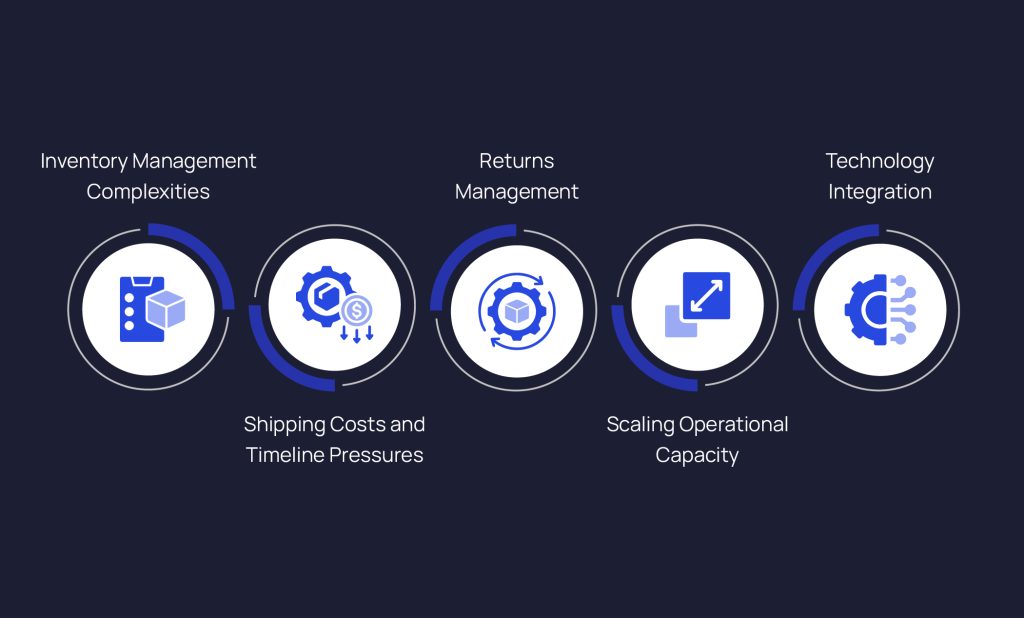
Even sophisticated fulfillment operations encounter obstacles. These friction points typically emerge at system interfaces, during growth phases, or when customer expectations outpace operational capabilities. Recognizing these common hurdles enables proactive management rather than reactive troubleshooting.
Inventory Management Complexities
Maintaining precise inventory visibility across sales channels presents significant challenges, including real-time synchronization requirements, accurate demand forecasting to prevent stock imbalances, coordination across multiple fulfillment locations, and accounting for inventory shrinkage through damage or loss.
Shipping Costs and Timeline Pressures
Transportation factors significantly impact both profitability and customer satisfaction. Rising carrier rates continuously pressure margins, while customer expectations for affordable shipping options grow. Delivery delays from weather events, capacity limitations, or carrier issues, plus international shipping complexities, further complicate fulfillment operations.
Returns Management
The return process consumes substantial resources while directly affecting customer satisfaction. Key challenges include developing efficient processing workflows, consistently determining product restocking eligibility, managing customer refund expectations, and systematically analyzing return patterns to address underlying quality or product description issues.
Scaling Operational Capacity
Growth introduces fulfillment complexities beyond volume increases. Managing seasonal demand peaks, expanding into new geographic markets, maintaining service consistency during rapid expansion, and integrating evolving technologies all require careful planning and execution to maintain fulfillment performance.
Technology Integration
Creating seamless technology ecosystems remains challenging yet essential. Critical integration points include connecting ecommerce platforms with fulfillment systems, supporting multiple sales channel integration, implementing comprehensive warehouse management solutions, and automating order routing and processing to minimize manual intervention.
How to Optimize the Order Fulfillment Process
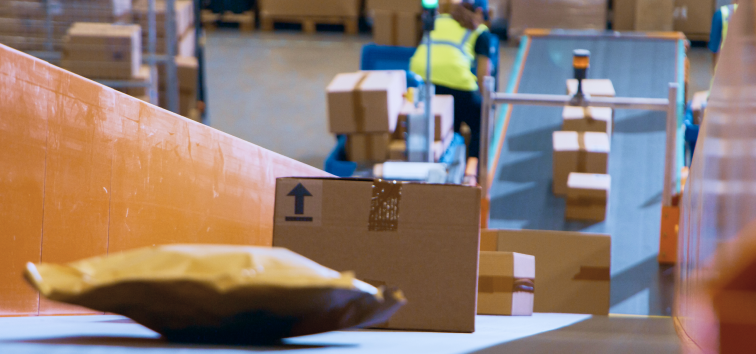
Enhancing your fulfillment operations can yield significant improvements in efficiency and customer satisfaction:
Implement Warehouse Management Technology
Modern warehouse management systems provide:
- Real-time inventory visibility
- Optimized picking routes and methods
- Labor allocation and productivity tracking
- Integration with order management systems
- Data-driven insights for continuous improvement
A robust ecommerce order fulfillment process depends on technology that connects your sales channels with your fulfillment operations. This enables automatic order transmission, inventory updates, and customer notifications.
Optimize Warehouse Layout
Strategic facility organization significantly enhances operational efficiency. Position high-velocity products in easily accessible locations, arrange inventory to minimize movement during picking, implement intuitive labeling systems, and design workstation layouts that support smooth process flows for receiving, processing and shipping activities.
Cultivate Partnerships
Developing strategic relationships with shipping providers offers substantial advantages. These include negotiated rate structures, prioritized handling during capacity constraints, access to specialized delivery services, and improved resolution processes for shipping complications or exceptions.
Strategically Implement Automation
Targeted automation dramatically improves fulfillment productivity. Consider conveyor systems for efficient product movement, barcode scanning technology for inventory accuracy, automated packaging solutions for consistency and efficiency, and robotics applications for suitable repetitive tasks where appropriate for your operation’s scale.
Monitor Performance Metrics
Tracking key fulfillment indicators enables data-driven improvement. Focus on metrics including order accuracy percentages, average fulfillment cycle times, shipping expenses as order value percentages, perfect order fulfillment rates (orders delivered complete, on-time and damage-free), and return frequencies with associated reasons.
Evaluate Geographic Distribution
Strategic inventory placement reduces both costs and delivery timeframes. Consider distributed fulfillment centers positioned near customer concentrations, zone-skipping strategies for efficient long-distance shipping, and cross-docking approaches to minimize handling requirements and storage durations for appropriate product categories.
Why Order Fulfillment is a Business Growth Lever
Effective order fulfillment transcends operational efficiency—it becomes a strategic advantage that drives business growth. When customers consistently receive their orders accurately and promptly, they develop trust and loyalty that translates into repeat business and positive word-of-mouth.
As consumer expectations continue to evolve, businesses that invest in developing robust fulfillment capabilities position themselves for sustainable growth. Whether you choose in-house operations, partner with a fulfillment center, or implement a hybrid approach, the right order fulfillment strategy creates a foundation for scaling your business while maintaining service excellence.
Ready to achieve order fulfillment excellence?
Anchanto’s Fulfillment Cost Reduction Solutions can transform your fulfillment operations to better meet market requirements—unlocking greater efficiency and savings.
FAQ
What is the difference between order processing and fulfillment?
Order processing typically refers to the administrative aspects of handling an order, including receiving the order information, verifying payment, and entering it into your system. Order fulfillment encompasses the entire physical process, from inventory management to picking, packing, shipping, and returns handling. While order processing is primarily informational, fulfillment involves the tangible handling of products.
How do order fulfillment services differ from in-house fulfillment?
Order fulfillment services are third-party providers specializing in storing inventory, processing orders, and shipping products on behalf of other businesses. Unlike in-house fulfillment where you manage all aspects yourself, these services offer expertise, infrastructure, and economies of scale. They typically charge storage fees, per-order processing fees, and sometimes additional services fees, allowing businesses to convert fixed fulfillment costs into variable expenses.
What should I look for in an order fulfillment center?
When selecting an order fulfillment center, consider location (proximity to your customers), technology capabilities (integration with your systems), scalability (ability to handle growth), reliability (track record with similar businesses), pricing structure (transparent, competitive rates), value-added services (kitting, custom packaging), and reporting capabilities. The best fulfillment partner aligns with your business needs, order volume, and customer expectations.
How can I optimize my direct order fulfillment process?
To optimize direct order fulfillment, focus on strengthening manufacturer relationships, implementing real-time inventory visibility systems, creating clear communication protocols, establishing quality control processes, developing efficient return procedures, and negotiating favorable shipping terms. Since direct fulfillment eliminates middlemen, emphasis should be placed on coordination and information flow between your sales channels and manufacturing partners.
What role does technology play in ecommerce order fulfillment?
Technology is the backbone of efficient ecommerce order fulfillment, enabling real-time inventory management across multiple sales channels, automated order routing, optimized picking paths, integrated shipping solutions, and comprehensive analytics. Advanced fulfillment technologies like warehouse management systems, order management systems, and automation tools help reduce errors, improve speed, enhance visibility, and ultimately deliver better customer experiences while controlling costs.